October 2026 Dark Web Threat Actor Trend Report
Note
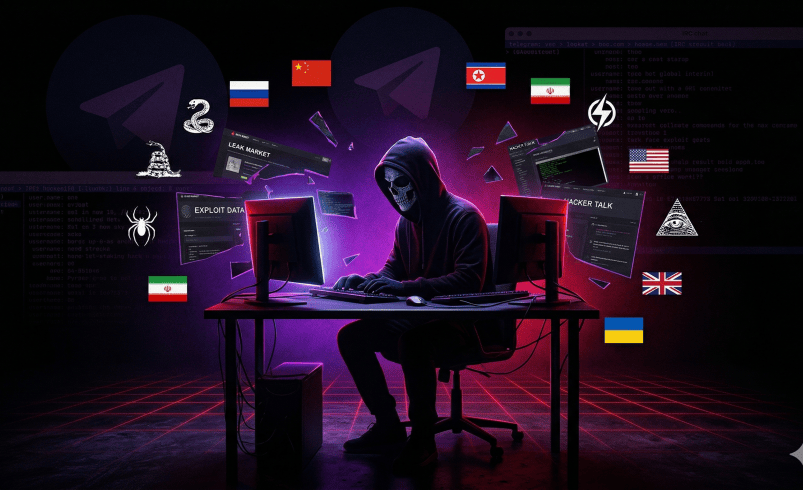
The October 2026 Dark Web Threat Actor Trend Report focuses on hacktivists, deep web and dark web activities, and publicly reported cyberattack incidents. It was noted that the factual accuracy of some of the content is difficult to verify independently.
Major Issue
- From a hacktivist perspective, some pro-Russian hacktivist groups claimed to have carried out DDoS attacks targeting government agencies in the Middle East, North Korean government and public institutions, and online content platforms in Japan. However, these are merely unilateral claims by the groups, and it has not been confirmed whether these attacks actually caused service disruptions.
- Evidence has emerged that pro-Russian DDoS groups have launched their own Tor-based portals and expanded the operation of their DDoS attack infrastructure. Specific features and the scale of participation have not been independently verified.
- In the cryptocurrency industry, a global cryptocurrency exchange officially announced the possibility of a large-scale cryptocurrency theft resulting from a breach of a DevOps engineer’s laptop, and disclosed evidence linking the incident to North Korea as well as the breach path. A blockchain analytics firm confirmed a data breach involving customer information caused by an AI-agent-based attack.
- In the Japanese region, large-scale personal information leakage was officially announced by companies in the retail and consumer goods, IT services, logistics, software, and gaming sectors. Additionally, cloud service providers, public universities, and local governments disclosed service damage caused by ransomware or security breaches.
- Four airlines in the South Korean and Japanese regions announced the possibility of customer data leaks due to unauthorized access to the passenger reservation systems of a global airline reservation service provider. It was confirmed that major airlines in both regions were affected.
- In France, hundreds of stores were damaged by an attack targeting the refrigeration systems of a major retailer. It was reported that the attack targeted the remote control modules of the equipment supplier, and physical operational disruptions were more prominent than data breaches.
- In Europe, e-government services at a government agency were temporarily suspended and later restored. Additionally, a company based in the United Kingdom announced that personal information may have been accessed due to unauthorized activity on a third-party customer communication platform.
- A new threat group claimed to include members from well-known hacking organizations and ransomware groups. On dark web forums, posts offering credit card information, malware distribution campaigns, initial access brokers (IABs), and recruitment of technical personnel were consistently observed.
- AI-related breaches also drew attention. A blockchain analytics firm revealed that external threat actors gained access to its internal systems and tools using aggressive AI agent-based attack techniques. Additionally, an AI development platform announced that some users were affected by a large-scale knowledge extraction (distillation) attack.
- Breaches involving supply chains and third-party services also continued. Breaches were reported at email marketing services, travel and hospitality management services, cloud service providers, internet service companies, and global cloud operators. A pattern was observed where a single service breach led to damage for multiple client companies.
Conclusion
The key trends in October 2026 were characterized by cyberattacks targeting the virtual asset industry, large-scale personal information leakage in Japan, attacks on industrial control systems in France, and law enforcement responses to major cybercrime organizations. Furthermore, claims of DDoS attacks by pro-Russian hacktivist groups, the emergence of new threat groups, and threat actor recruitment activities on dark web forums demonstrated that the dark web and forum-based cybercrime ecosystem continues to expand.
Incidents of breaches at virtual asset exchanges suggest that the devices and authentication and signing environments of development and operations personnel can serve as primary paths of entry, and they also highlight the importance of security audits for supply chains and third-party services. Since some claims lack independent verification, they must be interpreted through cross-checking them against official announcements.